TECHNOLOGIES FOR LEARNING
Technologies for learning as spesific teaching learning patterns that serve reliably as templates for achieving demonstrably effective learning.
Cooperative Learning
Integration : Research by Robert Slavin, Spenser Kagan, David and Robert Johnson has revealed that not only does cooperative learning yield better acquisition and retention of lesson content, but it also promotes better interpersonal and thinking skills.
1. Learning Together Model
2. Team assisted individualization
3. Computer-based cooperative learning

Games
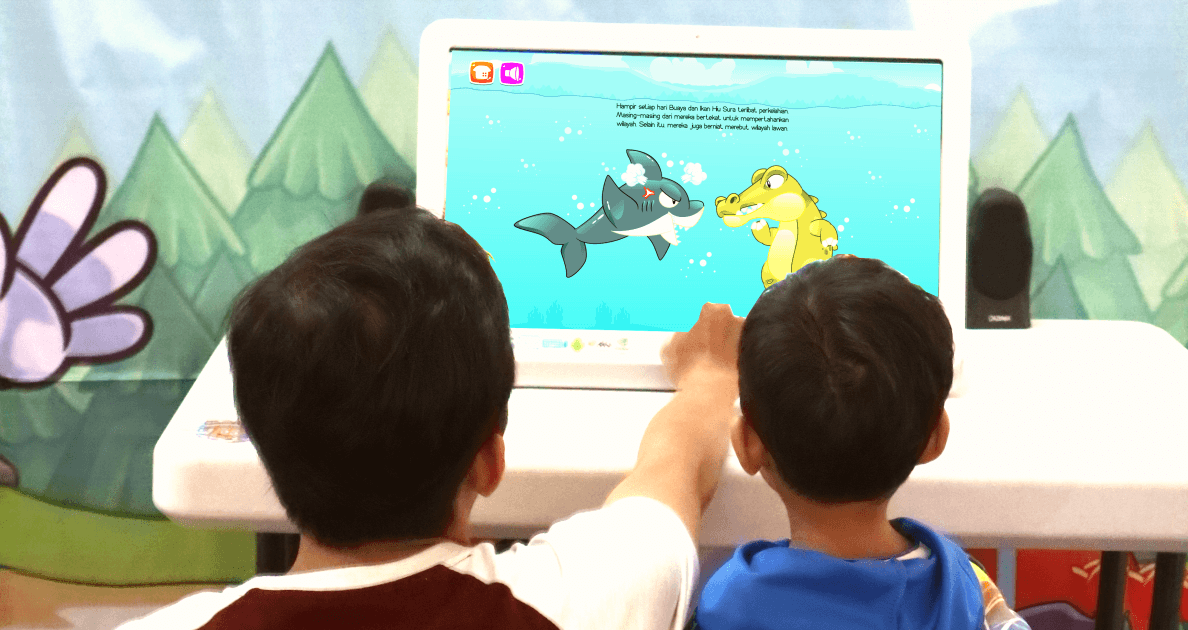
The terms game, simulation, and simulation game are often used interchangeably. A game is an activity in which participants follow prescribed rules that differ from those of real life as they strive to attain a challenging goal.
➤Advantages : 1. Exposure to the target language
2. Improvement of language skills, structures and vocabulary in particular
3. Different games exercise different skills and result in different effects
➤Limitations : 1. Competition
2. Distraction
3. Poor Design
➤Integration : Instructional games are particulary well suited to the following :
1. Attainment of cognitive objectives, particulary those involving recognition,
discrimination, or memorization.
2. Adding motivation to topics that ordinarily that can make students'
interest grows.
3. Small-group instruction.
4. Basic skills.
5. Vocabulary building.
Simulation
A simulation is an abstraction or simplification of some real-life situation or process.
➤Advantages : 1. Realistic
2. Safe
3. Simplified
➤Limitations : 1. Time consuming
2. Oversimplification
➤Integration : Training in motor skills. Instruction in social interaction and human
reactions.
An example of simulation is Role Plays. Role plays refers to a type of simulation in which the dominant feature is relatively open-ended interaction among people.
Simulation Games
A simulation game combines the attribute of a simulation ( role playing, a model of reality) with attribute of game (striving toward of a goal, specific rules). Because they combine the characteristic of both simulation games have advantages, limitations, and applications in common with both formats.
Learning Centers
A learning center may be as simple as a table and some chair around which students discuss,
or it may be as sophisticated as several networked computers used by a group for collaborative research and problem solving.
➤Advantages : 1. Self-pacing
2. Active learning
3. Teacher role
➤Limitations : 1. Cert
2. Management
3. Student responbility
4. Student isolation
➤Integration : 1. Skill centers
2. Interest centers
3. Remedial centers
Programmed Instruction
Programmed instruction was chronologically the first technology for learning and is an explicit application of principle of learning theory-operant conditioning or reinforcement theory.
Programmed Tutoring
Programmed tutoring (also referred to as structured tutoring) is a one-to-one method of instruction in which the tutor's responses are programmed in advanced in the form of carefully structured printed instructions
Programmed Teaching
Programmed teaching, also known as direct instruction, is an attempt to apply the principles of programmed instruction in a large group setting. In this approach, A whole class is broken into smaller groups of 5 to 10 students. These smaller groups are led through a lesson by a teacher, paraprofessional, or student peer following a highly prescriptive lesson plan. Programmed teaching is seen by its proponents as a total system for organizing classroom instruction and designed to generate high rates of responding by all students.
Personalized System Of Instruction
It can be describe for managing instruction. The idea that all student ceed achieve basic mastery but need different of time and practice to get there.
➤Advantages : 1. Self pacing
2. Mastery "acumulation of ignorance"
3. Effective
➤Limitations : 1. Development cost
2. Behaviorist commitment
3. Self discipline
➤Integration : This technology for learning has been applied most frequently to
postsecondary education, particulary at the community college level.
*Source : Heinich, Molenda, Russell, Smaldino et. All, 2002. Instructional Media and Technologies For Learning volume 7. California: The University of California.
Komentar
Posting Komentar